How to Choose the Right Dog Collar: A Complete Guide for Pet Owners
Choosing a dog collar is more than just picking a pretty color. The right collar keeps your dog safe, holds their ID tags, and helps with daily training. The wrong one can cause skin irritation, hair loss, or even serious neck injuries.
With hundreds of options available, finding the perfect match can feel overwhelming. This guide breaks down everything you need to know to make the safest choice for your furry friend.
1. Understand the Different Types of Dog Collars
Not all collars serve the same purpose. Depending on your dog’s breed, behavior, and daily activities, you will need a specific style.
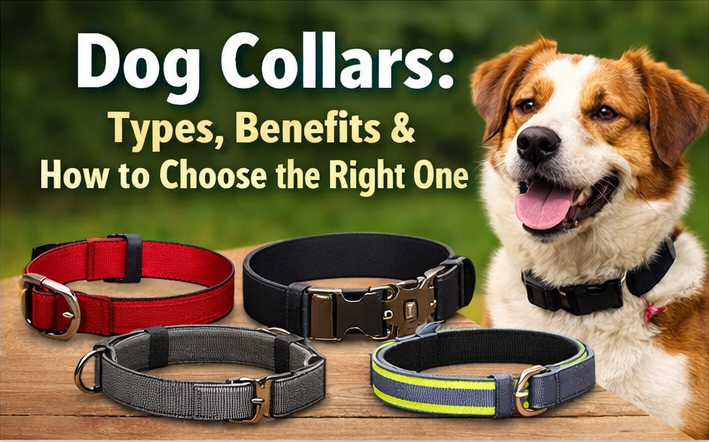
This is the most common everyday collar. It features a buckle or quick-release clip and a D-ring for leash attachment. It is perfect for well-behaved dogs who do not pull during walks.
Martingale Collars (No-Slip)
Designed originally for sighthounds (like Greyhounds) who have heads narrower than their necks, Martingale collars tighten slightly when pulled. This prevents dogs from backing out of their collar without choking them.
If your dog is a heavy puller, a head halter or a front-clip harness is often safer than a traditional collar. They redirect your dog’s forward motion without putting pressure on their windpipe.
2. Choose the Right Material for Comfort and Durability
Your dog will likely wear their collar for hours at a time, so material matters.
- Nylon: Lightweight, affordable, and available in endless patterns. However, it can harbor bacteria if it gets wet and isn’t washed regularly.
- Leather: Durable, stylish, and softens over time with natural oils from your dog’s skin. It is excellent for dogs with sensitive skin.
- Biothane (Waterproof Coated Webbing): Smudge-proof, stink-proof, and 100% waterproof. This is the ultimate choice for dogs who love swimming or playing in the mud.
3. How to Measure Your Dog for a Perfect Fit
A collar that is too loose will slip off, while a tight collar will restrict breathing. Follow these steps to get the right measurement:
The Two-Finger Rule
Wrap a soft measuring tape around the base of your dog’s neck. Add two inches to that measurement. When the collar is on, you should easily be able to slide two fingers between the collar and your dog’s neck. For toy breeds, use one finger; for extra-large breeds, use three fingers.
Frequently Asked Questions About Dog Collars
Should a dog wear a collar all the time?
No, it is generally recommended to take your dog's collar off inside the house, especially at night or when left crated. Continuous wear can cause matting, skin irritation, and poses a minor snagging hazard. Always ensure they wear it outside for identification.
What is the safest type of dog collar?
For everyday wear, a flat nylon or leather collar with a breakaway snap or a sturdy brass buckle is the safest option. If your dog is prone to slipping out of collars, a Martingale collar is the safest choice for walks.
How do I know if my dog's collar is too tight?
If you cannot fit two fingers comfortably underneath the collar, it is too tight. Other warning signs include coughing, heavy breathing, hair loss around the neck, or skin redness.
At what age should a puppy start wearing a collar?
Puppies can start wearing a soft, lightweight collar as early as 8 weeks old. Introduce it gradually during meal times or play periods so they associate the collar with positive experiences.
Why does my dog keep scratching at their collar?
Your dog might be scratching because the collar is too tight, the material is causing an allergic reaction, or moisture is trapped underneath it. Try washing the collar, checking the fit, or switching to a hypoallergenic material like leather.