Choosing the Right Bowl for Your Dog: A Complete Guide for Pet Parents
As dog owners, we spend hours researching the best dog food, the sturdiest leashes, and the comfiest beds. But how much thought do we put into the bowl they eat from?
Choosing the right bowl for your dog is just as important as choosing the food itself. The wrong bowl can lead to digestive issues, skin allergies, and unnecessary mess. In this guide, we will break down everything you need to know to pick the perfect dining dish for your furry friend.
1. Material Matters: What is the Best Dog Bowl Material?
Not all dog bowls are created equal. The material you choose affects how easy the bowl is to clean, how long it lasts, and whether it is safe for your dog’s health.
Stainless Steel Bowls
Stainless steel is widely considered the gold standard for dog bowls.
- Pros: Extremely durable, scratch-resistant, unbreakable, and dishwasher safe. They do not harbor bacteria easily.
- Cons: They can look plain, and some dogs dislike the clinking sound of their collars hitting the metal.
- Tip: Look for stainless steel bowls with a non-slip rubber base to prevent them from sliding around your floor.
Ceramic Bowls
Ceramic bowls are a beautiful, stylish option that can easily match your home decor.
- Pros: Heavy enough that dogs can’t easily push them around. They come in endless colors and designs.
- Cons: They can crack or chip easily. Micro-cracks can trap harmful bacteria, making them unsafe.
- Tip: Always inspect ceramic bowls regularly for chips and wash them thoroughly.
Plastic Bowls
While plastic bowls are cheap and readily available, they are generally not recommended by veterinarians.
- Pros: Inexpensive, lightweight, and come in many colors.
- Cons: Plastic scratches easily. These tiny scratches become a breeding ground for bacteria, which can cause “dog acne” (chin rashes). Some dogs also like to chew on them.
2. Choosing the Right Shape and Design
Your dog’s breed, face shape, and eating habits play a huge role in the style of bowl they need.
Standard Flat-Bottom Bowls
These are best for dogs with average-length snouts (like Labradors or Golden Retrievers). They are versatile and work well for both food and water.
Shallow Bowls for Small Breeds and Puppies
Dogs with short snouts or flat faces (Brachycephalic breeds like Pugs, French Bulldogs, and Shih Tzus) struggle with deep bowls. A shallow, wide bowl allows them to reach their food easily without putting strain on their necks or pressing their noses against a high wall.
Deep, Narrow Bowls for Long-Eared Breeds
If you own a Cocker Spaniel, Basset Hound, or Afghan Hound, you know the struggle of keeping their ears out of their food. Deep, cone-shaped (or inverted-V) bowls keep their long ears safely outside the bowl while they eat.
Slow Feeder Bowls for Fast Eaters
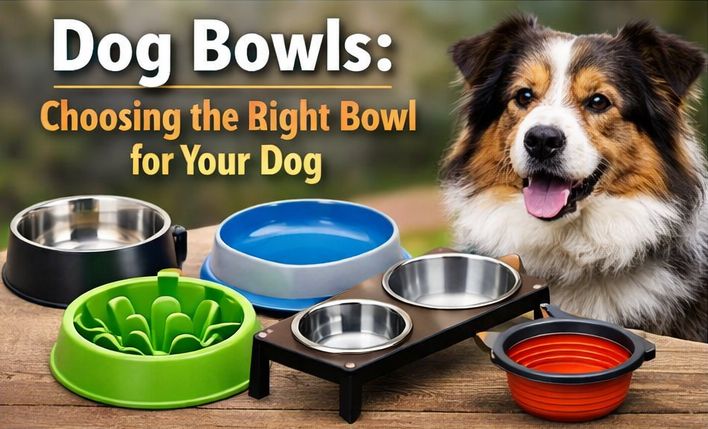
Does your dog inhale their food in seconds? Fast eating can cause bloating, gas, and a dangerous condition called Gastric Dilatation-Volvulus (GDV). Slow feeder bowls feature built-in mazes and ridges that force your dog to take smaller bites, improving digestion significantly.
3. Standard vs. Elevated Bowls: Which is Better?
Should your dog eat off the floor, or should their bowl be raised?
Floor-Level Bowls
Perfect for small to medium-sized dogs. Eating from the ground is the natural foraging position for wild dogs and works perfectly for most family pets.
Elevated (Raised) Dog Bowls
Raised bowls sit inside a wooden, plastic, or metal stand to bring the food closer to the dog’s mouth.
- Who they are for: Great for large and giant breeds (like Great Danes or German Shepherds), senior dogs with arthritis, or dogs with medical conditions like megaesophagus.
- Caution: If you have a giant breed prone to bloat, consult your vet before using an elevated bowl, as some studies suggest it may increase the risk if used incorrectly.
Frequently Asked Questions
1. How often should you wash a dog's water bowl?
You should wash your dog’s water bowl at least once a day with warm water and pet-safe soap. Water bowls can quickly develop a slimy film called biofilm, which is a collection of bacteria that can make your dog sick.
2. Can a dirty dog bowl make a dog sick?
Yes, a dirty dog bowl can cause vomiting, diarrhea, and bacterial infections like Salmonella or E. coli. It can also cause skin issues, such as canine acne or rashes on your dog's chin and muzzle.
3. What size bowl does my dog need?
As a general rule, a dog bowl should comfortably hold double the amount of food your dog eats per meal. This prevents the food from spilling over the edges while they eat.
- Small dogs (under 20 lbs): 1 to 2 cups capacity.
- Medium dogs (20-50 lbs): 3 to 4 cups capacity.
- Large dogs (over 50 lbs): 5+ cups capacity.
4. Why does my dog push their bowl across the floor?
Dogs usually push their bowls because the bowl is sliding around, making it hard for them to grab the food. Investing in a heavy ceramic bowl or a stainless steel bowl with a silicone non-slip base will solve this problem completely.
5. What is the healthiest type of bowl for a dog?
The healthiest and safest type of bowl for a dog is high-quality, food-grade stainless steel. It is non-porous, doesn't scratch easily, doesn't leach chemicals, and can be completely sanitized in a dishwasher.